
A new moon has been found by astronomers using NASA's James Webb Space Telescope
A new moon has been found by astronomers using NASA's James Webb Space Telescope to orbit the icy seventh planet from the sun, Uranus.
Because the moon, known as S/2025 U1, is only about 6 miles (10 kilometers) in diameter, it was not visible to NASA's Voyager 2 probe during its 1986 flyby of the planet and was not detectable by other telescopes. Then came the James Webb Space Telescope (JWST), which was very powerful.
To locate the tiny moon, a team of researchers from the Southwest Research Institute (SwRI) in Colorado used JWST's Near-Infrared Camera (NIRCam) to make ten separate 40-minute exposures of Uranus. With its discovery, there are now 29 known Uranian moons.
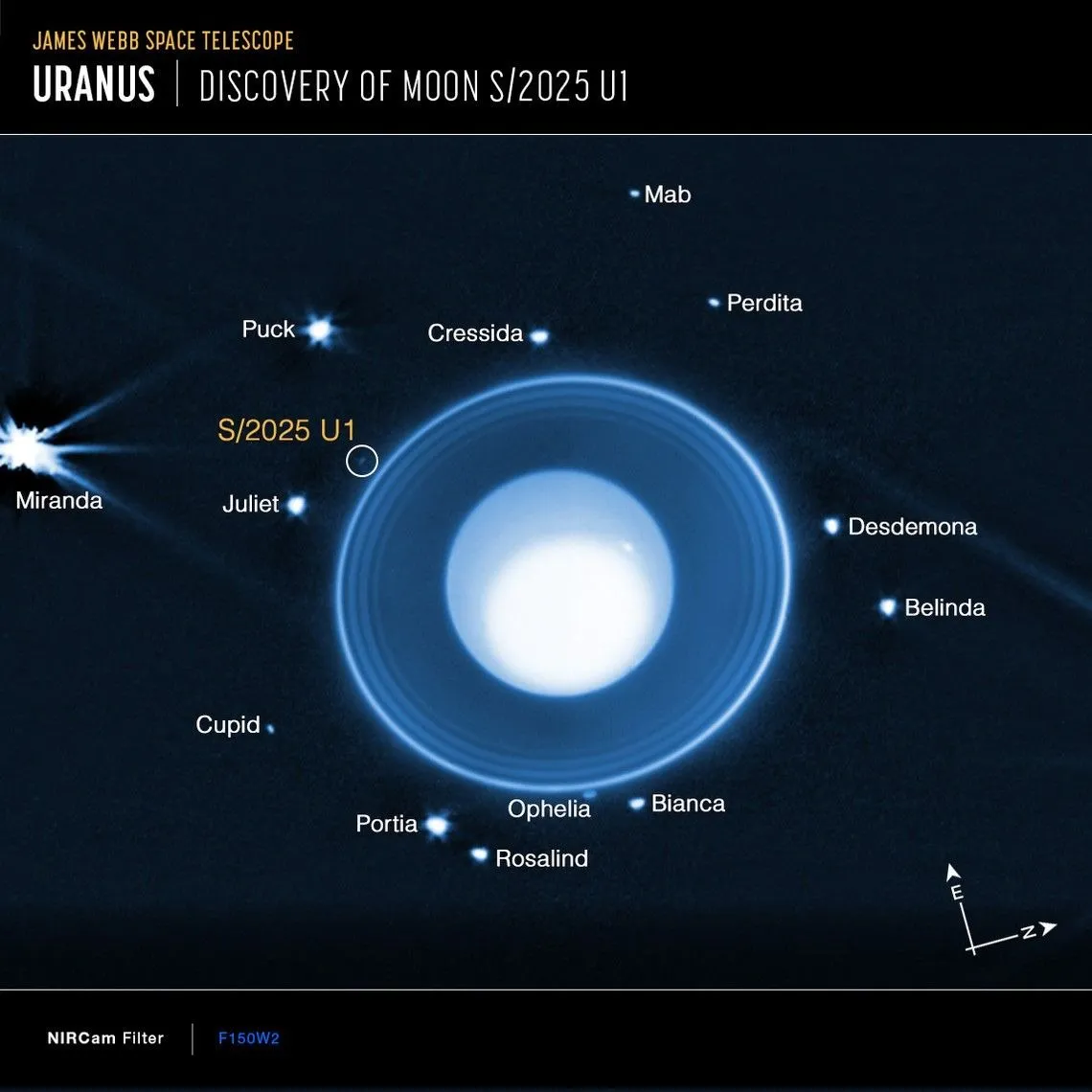
The distance between S/2025 U1 and Uranus' center is approximately 35,000 miles (56,000 km). In contrast, the average distance between Earth and its moon is 238,855 miles (384,400 km). The circular orbit of S/2025 U1 around Uranus suggests that it most likely formed in its present location.
Within the orbit of Uranus' largest moons, Miranda, Ariel, Umbriel, Oberon, and Titania (27 of Uranus' 29 moons are named after Shakespearean characters), the moon orbits alongside several smaller satellites. The International Astronomical Union (IAU) will eventually give S/2025 UI a formal name.
Scientists say the discovery of S/2025 U1 not only demonstrates the groundbreaking capabilities of the James Webb Space Telescope, but also highlights the fact that much more needs to be discovered about Uranus and its intricate system of moons and rings.
As part of the team behind this discovery, Matthew Tiscareno of the SETI Institute in Mountain View, California, said in a statement, "No other planet has as many small inner moons as Uranus, and their complex inter-relationships with the rings hint at a chaotic history that blurs the boundary between a ring system and a system of moons." "Moreover, it is likely that even more complexity is yet to be discovered because the new moon is smaller and much fainter than the smallest of the previously known inner moons."
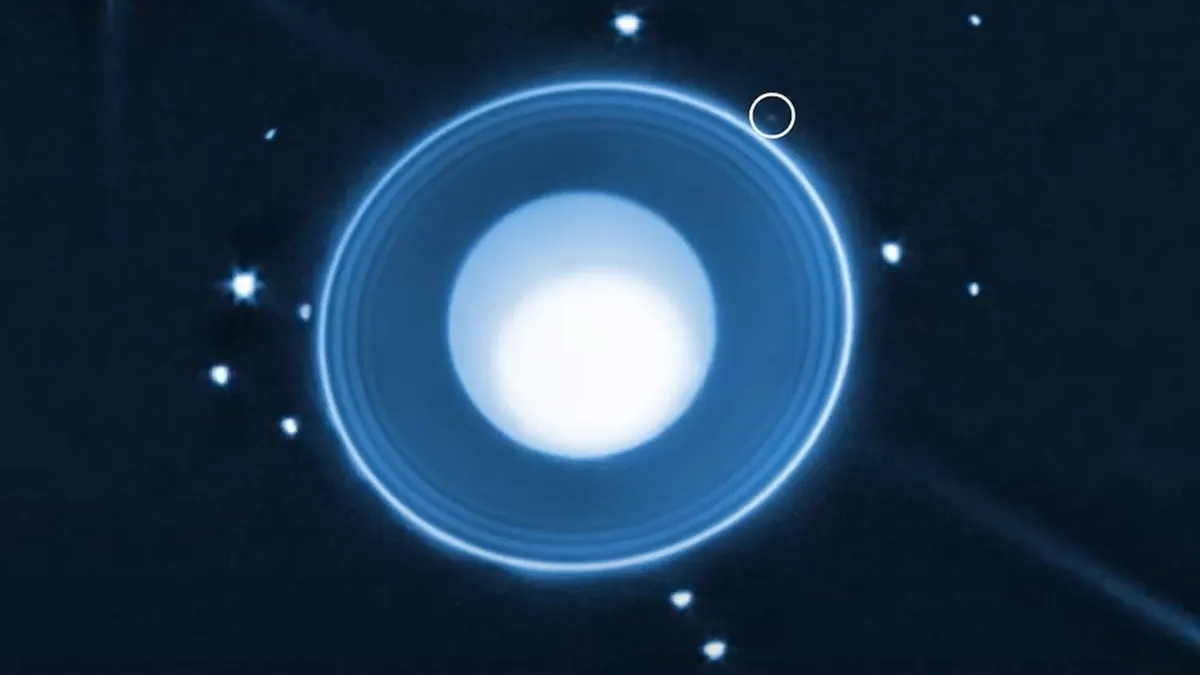
The 13 rings of Uranus are separated into two outer rings and an inner system. The rings of Uranus are composed of dark material and are more challenging to see than those of Jupiter and Saturn. Some of the planet's rings are held in place by the 14 inner moons that orbit among the faint inner rings.
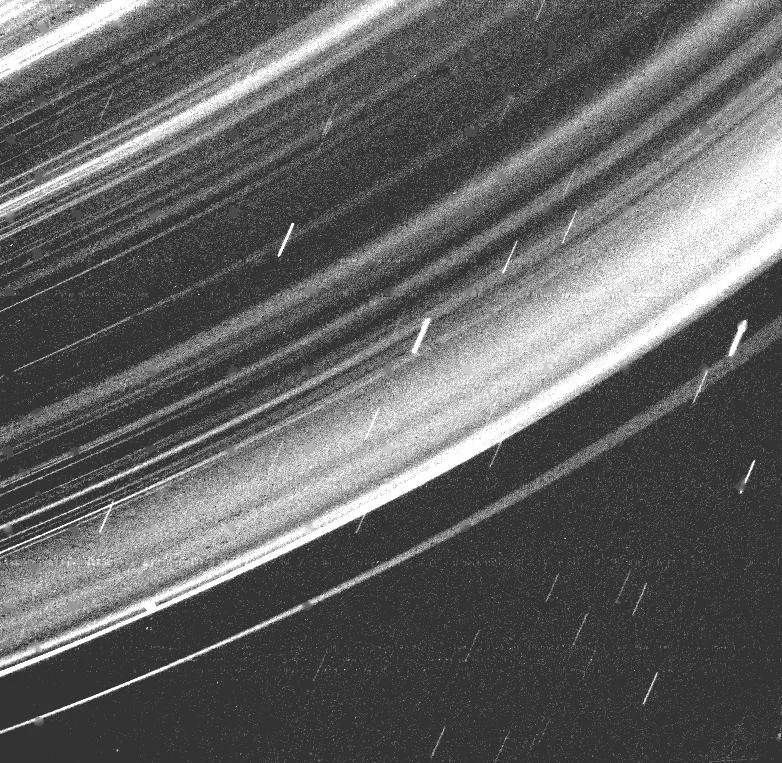
The first spacecraft to pass Uranus was NASA's famous interstellar Voyager 2 probe in January 1986. To this day, it is the only spacecraft to have ever visited the far-off ice giant. NASA claims that at the time, astronomers were only aware of roughly five moons orbiting Uranus.
According to scientists, we will be able to learn even more about our distant neighbors at the outer reaches of the solar system thanks to the capabilities of the James Webb Space Telescope.
Maryame El Moutamid, a lead scientist at SwRI, stated, "Going forward, the discovery of this moon underscores how modern astronomy continues to build upon the legacy of missions like Voyager 2, which flew past Uranus on Jan. 24, 1986, and gave humanity its first close-up look at this mysterious world." "The James Webb Space Telescope is pushing that frontier even farther now, nearly forty years later."
