
Crescent Moon to Form Triangle with Venus and Jupiter on August 20
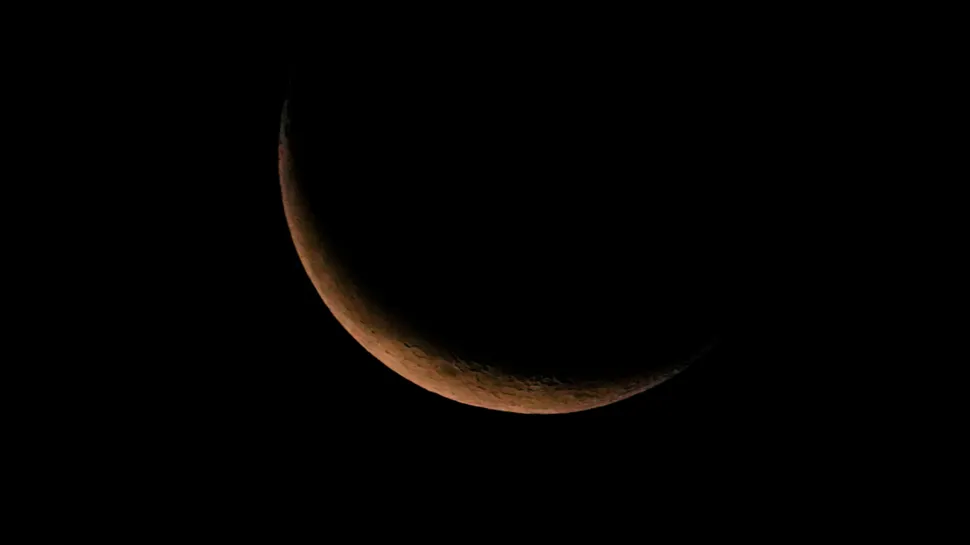
A thin crescent moon will meet Venus and Jupiter to form a celestial triangle in the predawn sky on August 20 if you look eastward in the hours before sunrise.
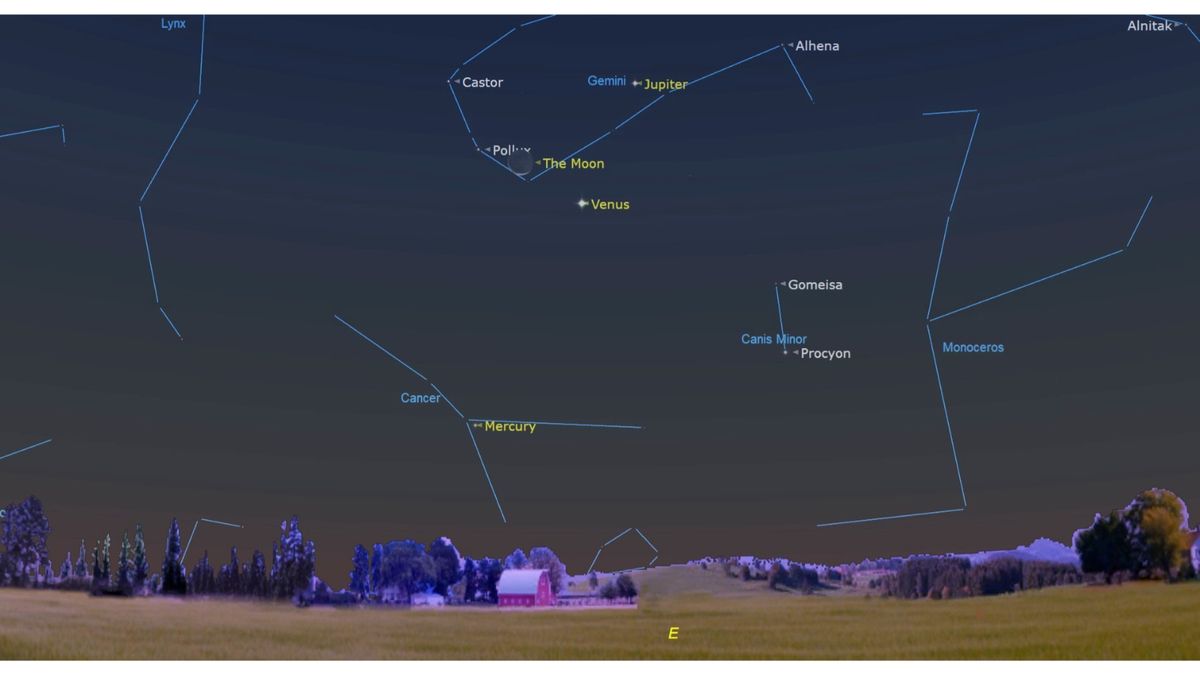
An hour and a half before sunrise on Aug. 20, the 9%-lit waning crescent moon is embedded in the sparkling stars of the constellation Gemini, about 15 degrees above the eastern horizon.
Jupiter will be less than 10 degrees to the upper right of the moon, forming the highest point of the cosmic triangle, while Venus will be visible as a bright 'morning star' shining about 5 degrees to the lower right of the lunar disk. Keep in mind that about 10 degrees of night sky correspond to the width of your fist at arm's length.
Early on the morning of August 19, the bright stars Castor and Pollux will be located to the moon's left. Mercury will be visible near the horizon, but it will quickly disappear into the sun's glare. For viewers in New York, the sun rises at 6:11 a.m. ET (1011 GMT).
Under favorable atmospheric conditions, a 6-inch telescope viewing the cosmic trio will show the moon-like phases of Venus, cloud bands on the surface of Jupiter, and the dark oval of the Grimaldi Basin impact site scarring the lunar surface.
Ahead of its new moon phase on Aug. 23, the wafer-thin lunar crescent will sweep past Venus in the upcoming nights to join Mercury and the Beehive open star cluster in the crab constellation, Cancer.
Check out our lists of the top telescopes and binoculars for 2025 if you're looking for new gear to explore the night sky. Our reviews of the top astrophotography-focused lenses and cameras are also worth reading for photographers.
