
The Quantum Shield: How Physics is Making Video Surveillance Unhackable
Modern encryption relies on mathematical complexity, but quantum techniques harness the laws of physics for security (Image credit: Future)
Today's encryption works well, until tomorrow's quantum computers arrive. We've developed armor that even machines from the future can't penetrate.
Imagine your most sensitive video footage—security camera feeds, confidential medical procedures, or private financial transactions—remaining truly private decades into the future. What if your video calls couldn't be intercepted and manipulated into deepfakes? We've engineered a new quantum-powered encryption system making this possible.
The Quantum Encryption Revolution
Traditional encryption relies on mathematical problems, like factoring huge numbers, that would take current computers thousands of years to solve. But emerging quantum computers use subatomic particle behaviors to potentially crack these codes in minutes. At Florida International University's Discovery Lab, we've developed dual-layered protection merging quantum physics with internet security protocols.
Our solution scrambles videos at the quantum level using truly random keys generated through quantum processes. Here's how it differs from conventional methods:
- Quantum Keys: Generated by measuring properties of photons or electrons whose states change unpredictably at quantum scales
- Quantum Image Representation: Video frames get translated into quantum states through mathematical frameworks called qubit encoding
- Atomic-Scale Scrambling: Quantum keys alter pixel values until footage appears as visual noise
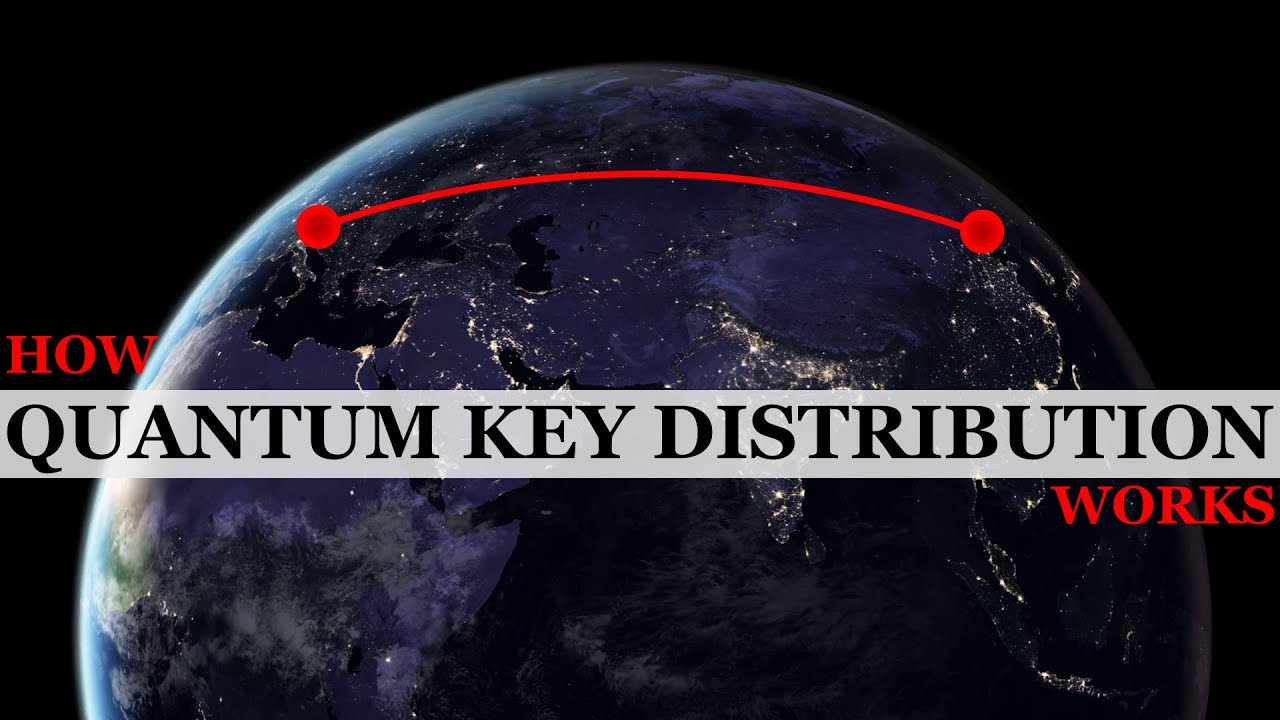
Quantum key distribution establishes unhackable communication channels (Image credit: YouTube/Lesics)
Why Your Current Videos Are Vulnerable
Consider this troubling reality: encrypted videos you store today could be harvested and stockpiled by adversaries. When quantum computers mature years from now, they'll unlock this backlog of footage. Medical procedures, confidential meetings, or private moments could become publicly exposed or altered retroactively.
"What makes quantum encryption revolutionary isn't just its strength today," explains cryptographer Dr. Alan Winston. "It's that it provides 'forward secrecy'—guaranteeing your secrets remain secrets even after quantum computers arrive."
Physics vs. Math: Why Quantum Wins
Traditional encryption uses mathematical algorithms vulnerable to increasingly powerful computers. Quantum cryptography relies on quantum mechanics principles:
- The Observer Effect: Any attempt to measure quantum particles alters them—meaning intruders always leave evidence of snooping
- Quantum Superposition: Particles exist in multiple states simultaneously until measured, creating inherent unpredictability
- Entanglement: Linked particles mirror each other instantly across distance—useful for key distribution
When combined with Transport Layer Security (TLS)—the encryption protecting websites—we create a "locked box within a locked tunnel" approach. Video data travels securely through standard internet infrastructure, fortified by quantum protection.
The Deepfake Defense Imperative
Fake videos created by AI could soon become nearly indistinguishable from reality (Image credit: Future)
Beyond privacy, quantum-secured videos provide authentication certainty. Imagine prosecuting a crime with video evidence. Our system detects:
- Content tampering: Any pixel alteration breaks quantum signatures irreparably
- Source verification: Quantum keys confirm the originating device's identity
- Temporal integrity: Mathematically proves videos haven't been edited retroactively
This becomes critical as deepfakes improve. Legal systems may soon require quantum verification for video evidence admissibility.
Global Quantum Security Efforts
Other researchers are taking different approaches to the quantum security challenge:
| Approach | Method | Current Status |
|---|---|---|
| Quantum Key Distribution | Photons transmitted through fiber optics | Functional over ~200km distances |
| Post-Quantum Algorithms | Math resistant to quantum attacks | NIST standardization underway |
| Chaos Theory Encryption | Complex dynamical systems | Lab prototype phase |
Unlike some alternatives, our video-specific framework directly addresses temporal aspects crucial for footage integrity. "Video security needs temporal continuity measures that static image systems ignore," notes MIT researcher Dr. Lena Petrovic.
Quantum Future in Motion
Our team is implementing a three-phase development roadmap:
- Optimization for real-time video streams (2025)
- Hardware acceleration for 4K/8K footage (2026-2027)
- Integration with deepfake detection systems (2027+)
Current limitations include computational overhead affecting high-resolution live streams. "We're optimizing quantum processing with edge computing chips," explains lead engineer Miguel Santos. "Soon your smartphone could process quantum-secured video calls."
The race intensifies as quantum processors advance. IBM's Condor processor (2023) boasts over 1,000 qubits—crossing the threshold where quantum decryption of current standards becomes feasible.
This article is republished from The Conversation under a Creative Commons license. The original was co-authored by S. S. Iyengar (Distinguished University Professor, Florida International University) and Quanzi Yuan (Research Scientist, Quantum Security Lab).
