
Rocket Science Reimagined: UK Ignites New Test Facility on McCartney's Scottish Sanctuary
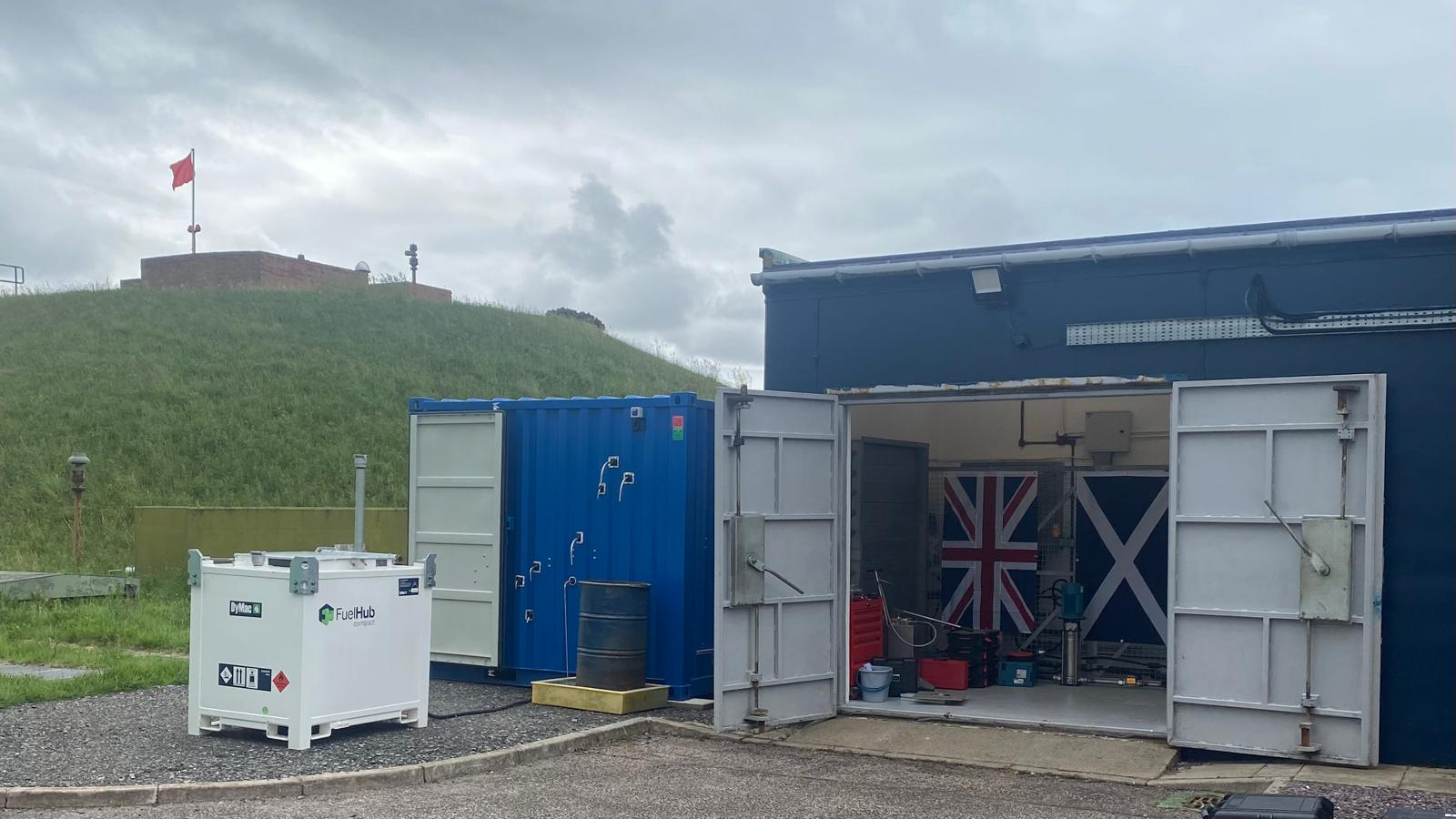
On the misty southwestern coastline where Paul McCartney once sought refuge from Beatlemania, a new kind of thunder is about to echo across the moors. The Mull of Kintyre peninsula, immortalized in McCartney's 1977 chart-topping ballad, has become the unlikely proving ground for Britain's space renaissance with the opening of MachLab - Scotland's first dedicated rocket propulsion testing complex.
From Ballads to Boosters: A Landscape Transformed
Walking these dramatic headlands today, you'd never guess that the tranquil sheep-dotted hills witnessed Cold War tensions when American nuclear weapons were secretly housed here. The peninsula's isolation, which attracted McCartney to buy High Park Farm in 1966, now serves strategic purpose again. 440 miles northwest of London, this remote corner of Argyll provides the perfect natural sound buffer for testing roaring rocket engines that might someday reach orbit.
"There's poetry in this transformation," observes space historian Dr. Emily Carlton. "The same vertiginous cliffs that inspired melancholic ballads now cradle technologies designed to break Earth's gravitational bonds. It shows how radically Britain's relationship with space has evolved in just two generations."
MachLab: Crucible of UK's Space Ambitions
The MachLab facility operates under the stewardship of the University of Glasgow's James Watt School of Engineering, a fitting legacy for an institution named after Scotland's Industrial Revolution innovator. Professor Patrick Harkness, the project's driving force, describes it as "a small facility with outsize importance in Britain's space ecosystem."
What distinguishes MachLab from conventional test sites is its unique versatility. Within its fortified concrete walls, engineers can safely trial three distinct propulsion types simultaneously:
- Solid-fuel rockets - Simple, reliable motors ideal for first-stage boosters
- Liquid-propellant engines - Precision-controlled systems for orbital maneuvering
- Cryogenic systems - Ultra-cold propellants like liquid oxygen/hydrogen combinations

"We're already stress-testing revolutionary cooling systems for 3D-printed engines," explains research associate Krzystof Bzdyk, who helped design the control systems. "Traditional manufacturing might require months to produce a single combustion chamber. Our additive techniques create complex geometries in days while improving heat dissipation."
Rising from Ashes: Britain's Launchpad Renaissance
This Highland initiative arrives at a pivotal moment. Britain's space ambitions suffered a symbolic blow in January 2023 when Virgin Orbit's air-launched rocket failed from Cornwall Spaceport, contributing to the company's bankruptcy. But the UK space landscape has since experienced rapid diversification with commercial operators like Orbex preparing orbital launches from Scotland's Shetland Islands.
The £500,000 ($670,000) facility, funded by UK Research and Innovation and industry partners, provides critical infrastructure missing since Britain abandoned rocket development after unsuccessful efforts like the Black Arrow in 1971. "MachLab plays the same foundational role for new entrants that NASA's test stands did for early American startups," notes aerospace consultant Ian Fotheringham.
Educational Engine for Europe's Space Race
Beyond commercial testing, MachLab serves as Britain's most advanced rocketry classroom. Professor Harkness emphasizes its educational mission: "We're ensuring students and researchers can access hotfire facilities safely - building skills for Europe's growing space sector. South African engineers have already visited, and we're preparing for Australian colleagues."
The timing couldn't be more strategic. With coordinated efforts like ESA's Launcher Challenge - which recently selected five companies for flight demonstrations as part of a future micro-launcher service - MachLab provides vital proving grounds for European launcher development.
Technical Specifications
| Test Capabilities | Features |
|---|---|
| Pressure System | 300-bar nitrogen supply for propellant pressurization |
| Command Center | Triple-redundant safety systems with remote operation |
| Data Acquisition | High-speed recording at 10kHz sampling rate |
| Thrust Capacity | Current: 25kN (5,600 lbf); Planned: 130kN (30,000 lbf) |
Mull's New Sonic Signature
From its initial rollout of lighter 25kN engines to planned 130kN test articles, MachLab anticipates evolving sonic signatures echoing across Kintyre. Locals accustomed to haunting bagpipe laments may soon recognize the staccato rhythm of ignition sequences and sustained engine burns.
As Scotland positions itself at Europe's space frontier, with SaxaVord Spaceport preparing vertical launches, MachLab now serves as the critical first validation point for engines that might someday compete with SpaceX's Merlin or Rocket Lab's Rutherford. McCartney's lyrics "The mist rolling in from the sea" take new meaning when clouds might soon mix with rocket contrails.
"We're standing where ancient geology meets cutting-edge combustion science," Professor Harkness reflects. "These hills have seen Neolithic settlements and Cold War secrets - now they're witnessing Britain's return to space propulsion." The Mull of Kintyre's cultural resonance now expands beyond vinyl to space metal, its melodies transforming from wistful chords to the controlled roar of engines testing their voice for the heavens.
