

NASA Awards Firefly Aerospace $177 Million for First Multi-Rover Mission to Moon's South Pole

A control room at Firefly Aerospace's Mission Operations Center. (Image credit: Firefly Aerospace)
Mission Overview
NASA has awarded Firefly Aerospace a $176.7 million contract to deliver two scientific rovers and three instruments to the moon's south pole. This mission, targeted for 2029, marks the first time NASA’s Commercial Lunar Payload Services (CLPS) program will send multiple rovers on a single flight. CLPS is NASA’s initiative to buy robotic moon delivery services from U.S. companies, making lunar exploration more frequent and affordable.
Why the south pole? This region contains permanently shadowed craters believed to hold large amounts of water ice—a critical resource that could be turned into drinking water, breathable air, or rocket fuel for future missions. The rovers will study if and how we can use these resources to support astronauts.
Firefly's Lunar Experience
This is Firefly’s fifth NASA CLPS task order and its fourth planned lunar mission. Their previous achievements include:
- March 2024: Successfully landed 10 NASA payloads on the moon’s near side.
- 2026 (planned): Mission to land on the moon’s far side after deploying an orbiter.
- 2028 (planned): Study of volcanic terrain at the Gruithuisen Domes.
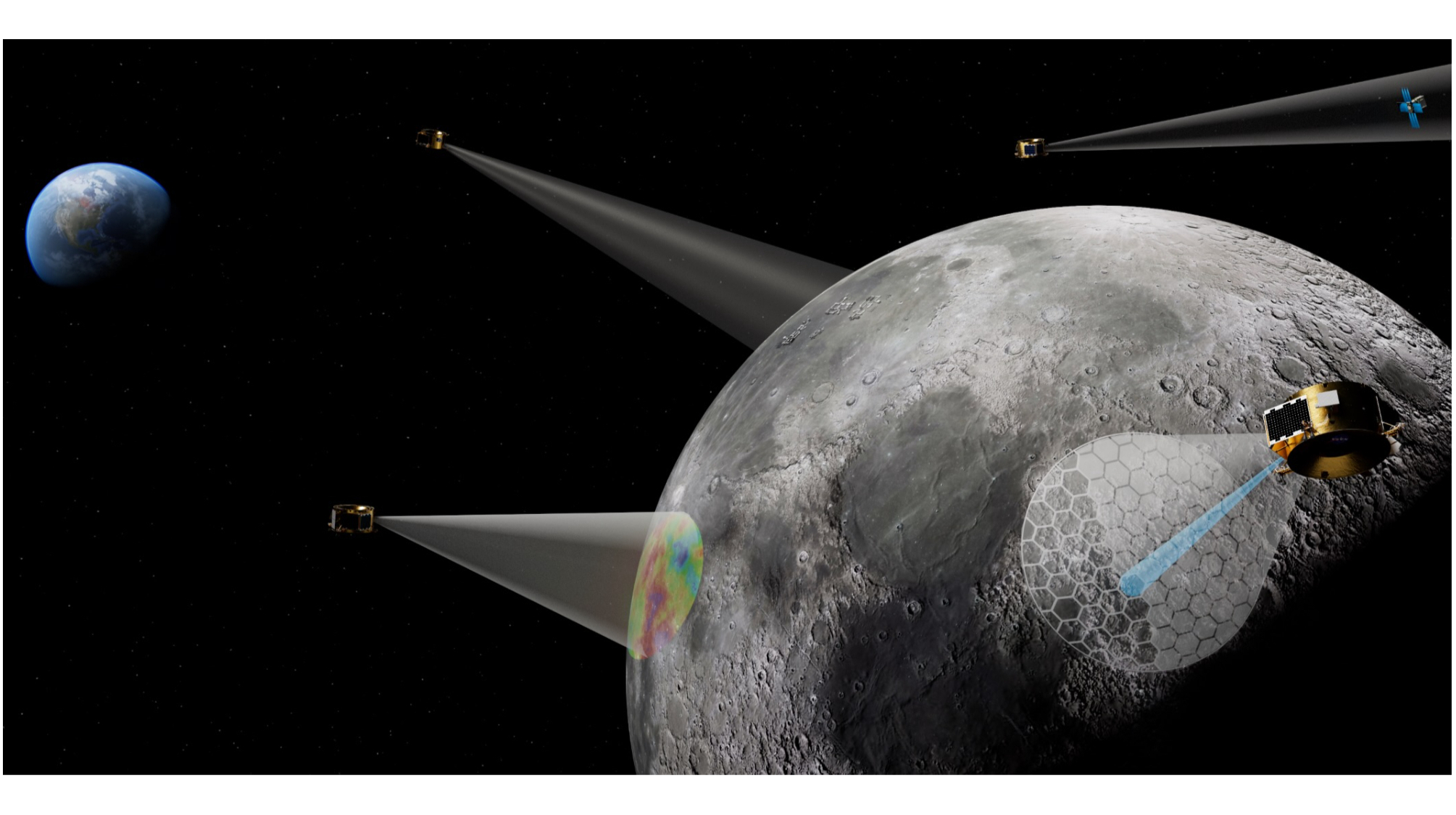
Artistic concept of a Firefly Aerospace spacecraft studying the moon. (Image credit: Firefly Aerospace)
Scientific Tools Heading to the Moon
The 2029 mission will deliver advanced tools built by NASA, Canada, and Switzerland:
- MoonRanger: A small, self-driving rover from NASA and Carnegie Mellon University. Carries a Neutron Spectrometer to map hydrogen (a sign of water ice) and study lunar soil.
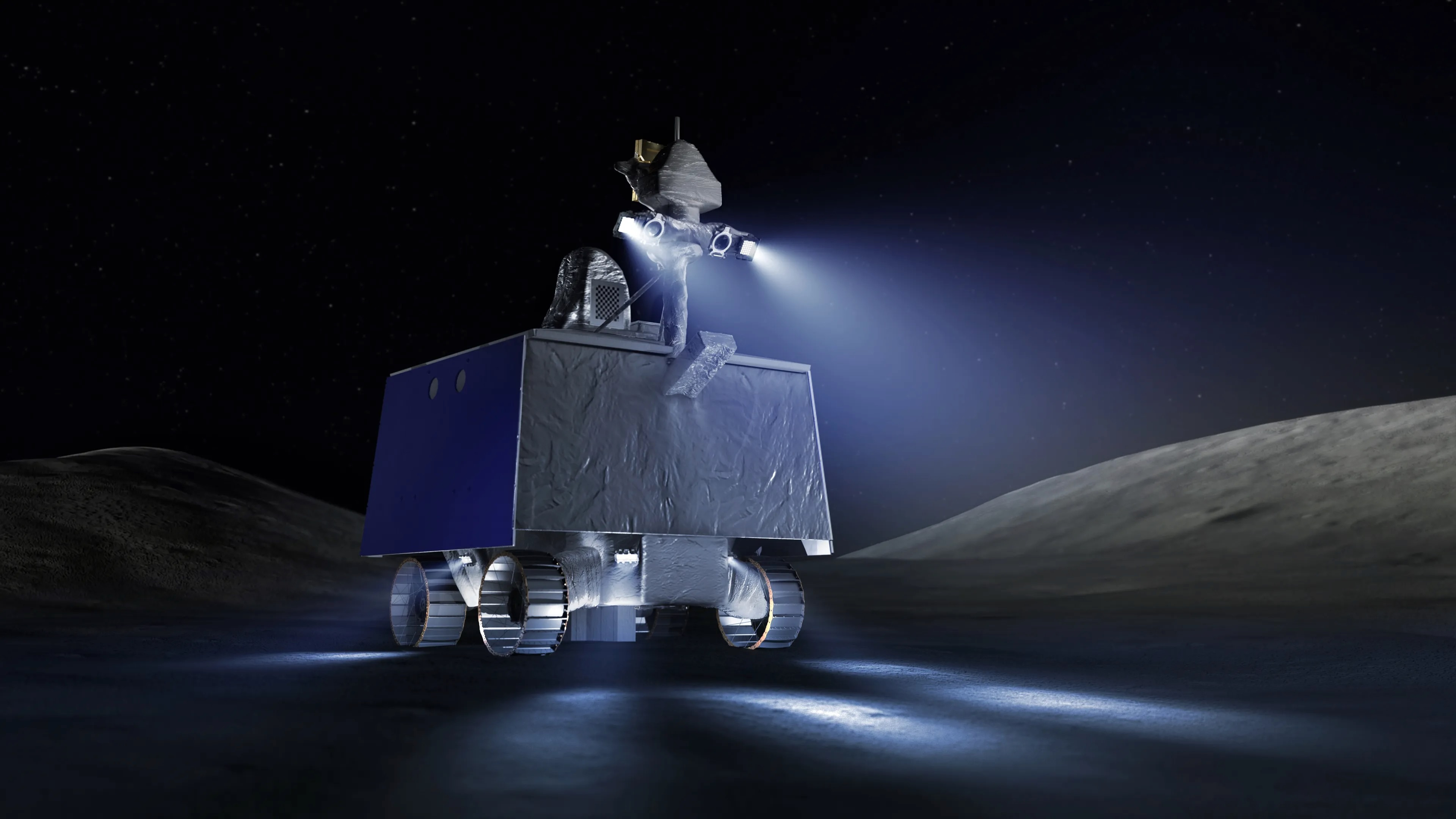
- Stereo Cameras: Will film how the lander’s rocket exhaust interacts with moon dust during touchdown.
- Laser Reflectors: Mirror-like devices placed on the surface to help orbiters measure precise distances to the moon.
- CSA Rover (Canada): Designed to venture into dark craters, measure radiation levels, hunt for water ice, and take soil samples using cameras and light sensors.
- Laser Mass Spectrometer (Switzerland): Mounted on a robotic arm, it will zap soil samples to analyze their chemical makeup.
Why This Mission Matters for Astronauts
Data from this mission will guide NASA's Artemis program, which aims to establish a sustainable human presence on the moon. Scientists need to understand:
- Exactly where water ice is concentrated.
- How rocket landings stir up damaging moon dust.
- Radiation levels in shadowed regions.
- Soil properties for building landing pads or habitats.
As NASA's Joel Kearns stated: “Through CLPS, NASA is embracing a new era of lunar exploration, with commercial companies leading the way.”
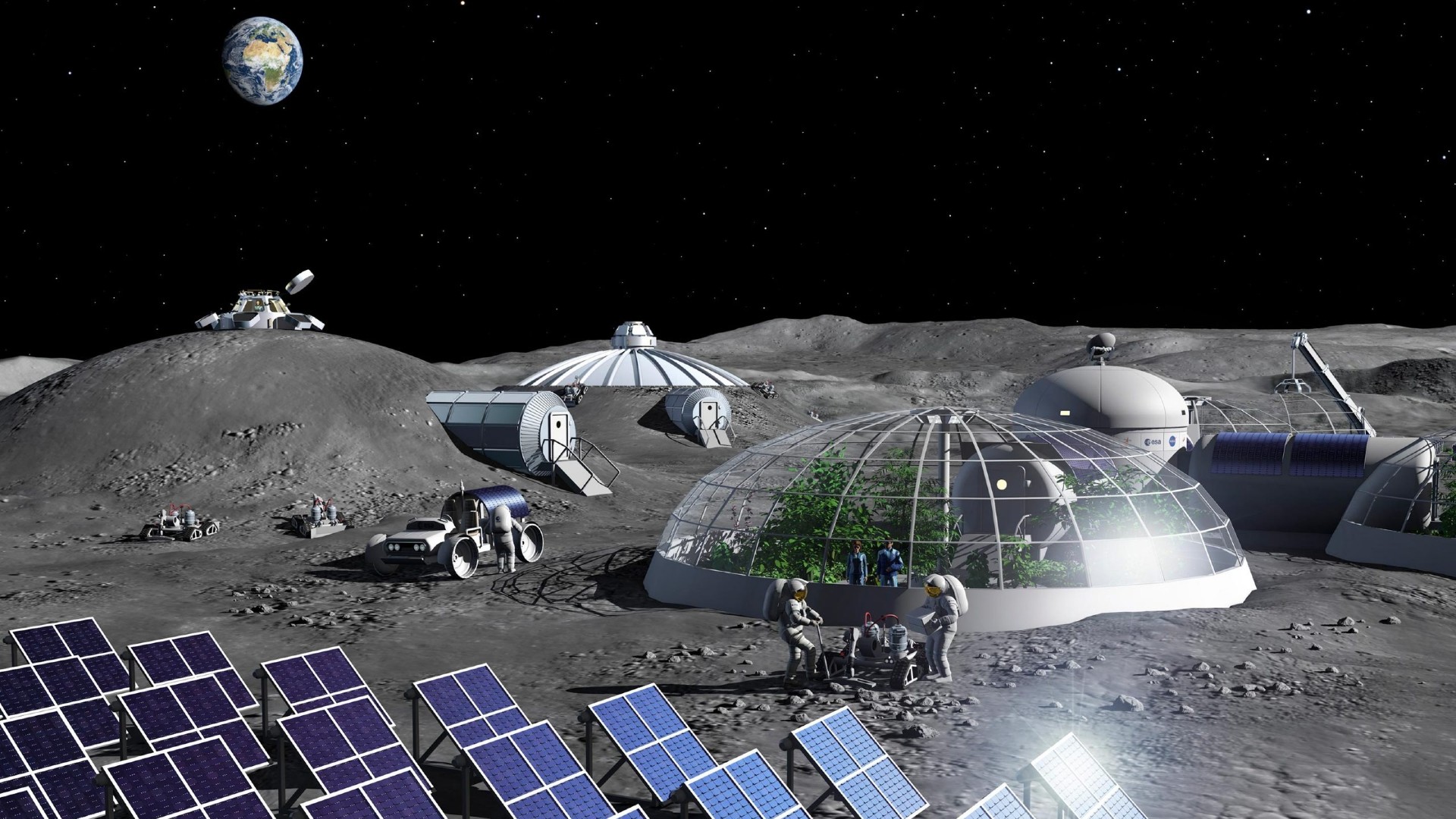
Future moon base concept enabled by missions like this. (Image credit: NASA)
