
SpaceX Crew-10 Astronauts Prepare for Return to Earth After Milestone ISS Mission
August 7, 2025
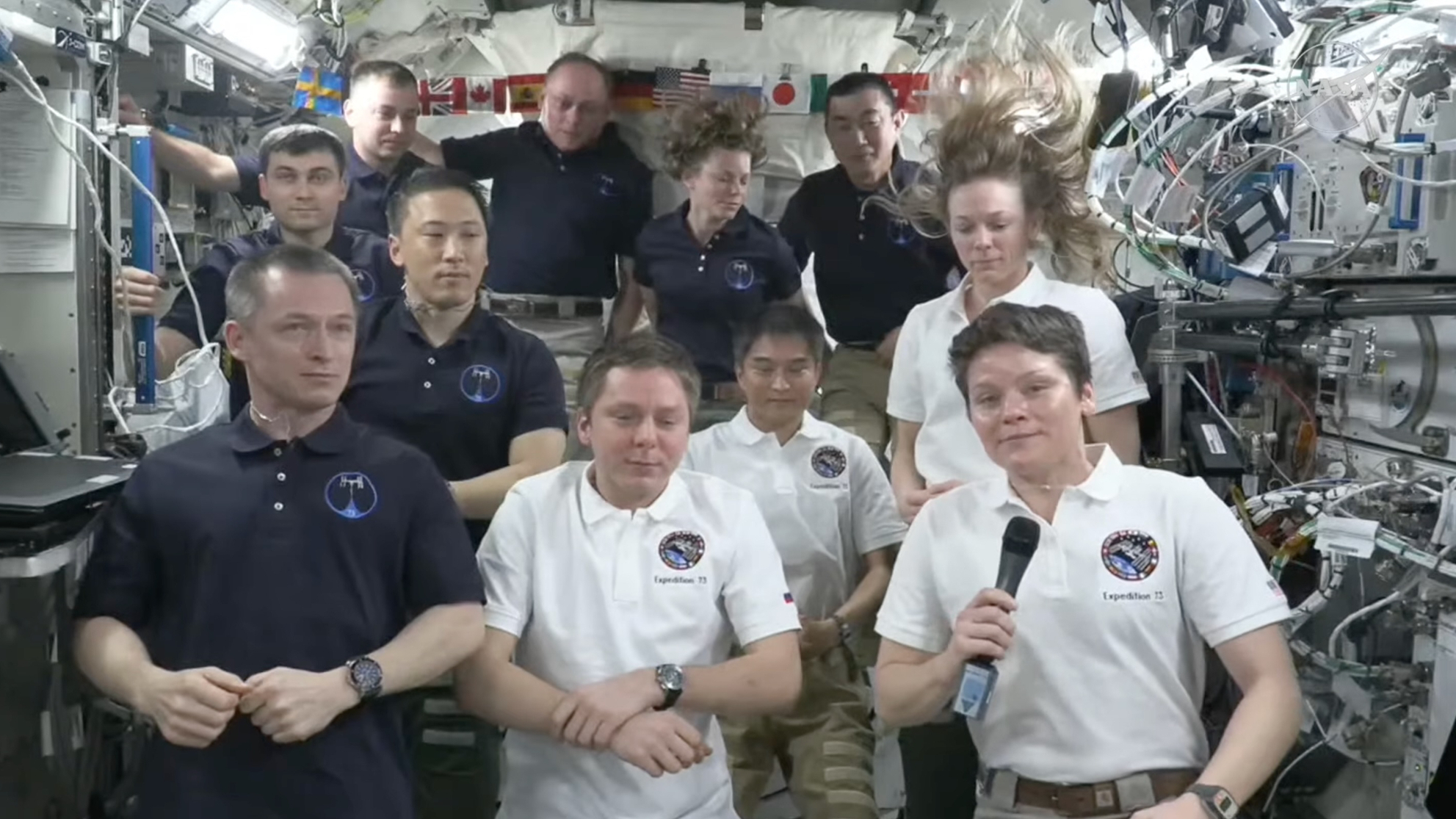
The Crew-10 astronauts share a final moment with station colleagues during Tuesday's farewell ceremony (Credit: NASA)
History floats 260 miles above Earth today as SpaceX's Crew-10 astronauts make final preparations for their return home after a transformative five-month mission aboard the International Space Station. NASA's Anne McClain, Nichole Ayers, JAXA's Takuya Onishi, and Roscosmos' Kirill Peskov are set to undock their "Endurance" Crew Dragon capsule today at 12:05 p.m. EDT (1605 GMT), marking the conclusion of a mission that exemplified the power of global space collaboration.
The Final Hours Aboard Orbital Outpost
This morning, the quartet conducted last-minute stowage operations inside their Crew Dragon spacecraft, triple-checking that all critical experiment samples and personal items were securely fastened for reentry. Their departure follows an emotional farewell ceremony Tuesday afternoon, where McClain reflected: "We've had the privilege of representing humanity up here. When we work together across borders, there's no limit to what we can accomplish."
The astronauts' return timeline appears precise as a Swiss watch:
- 9:45 a.m. EDT: NASA coverage begins showing hatch closure 10:20 a.m. EDT: "Endurance" sealed off from ISS 11:45 a.m. EDT: Undocking live stream resumes 12:05 p.m. EDT: Physical separation from station 11:58 a.m. EDT (Aug 8): Splashdown off California coast
The Delicate Ballet of Return
Undocking initiates one of spaceflight's most precise sequences. Mission controllers will guide the cone-shaped Endurance spacecraft through a carefully choreographed departure burn to establish a safe separation distance before a deorbit burn tomorrow slows the vessel sufficiently to drop from orbit. "It's a coordinated dance between physics and engineering," notes former NASA Flight Director Paul Hill. "That capsule will slice through the atmosphere at 17,500 mph, with its heat shield enduring temperatures approaching 3,500°F before finally kissing the Pacific.
Recovery ships, stationed in the primary splashdown zone, stand ready with specially trained teams who'll secure the bobbing capsule and help the astronauts reacclimate to Earth's gravity after their extended microgravity exposure.
A Legacy of Scientific Discovery
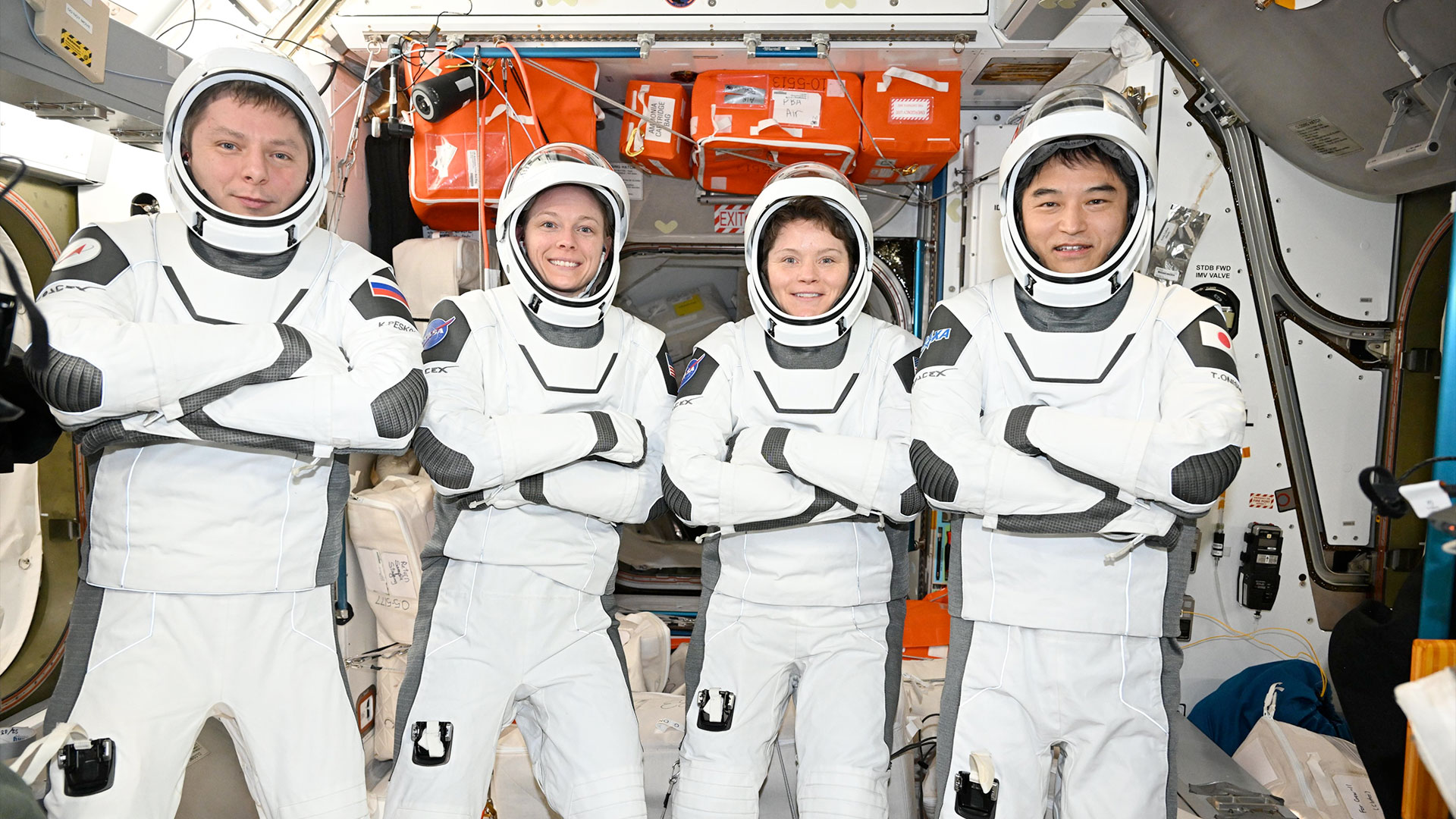
The Crew-10 team: (L-R) Kirill Peskov, Anne McClain, Nichole Ayers, and Takuya Onishi (Credit: SpaceX)
During their 148-day expedition, Crew-10 became scientific trailblazers:
- Conducted over 200 experiments including advanced fluid physics research that could improve medical devices
- Tested new radiation-shielding materials crucial for future Moon/Mars missions
- Deployed CubeSats designed by university students from six countries
- Captured imagery of climate change indicators using the station's Earth-facing instruments
Their research contributions come at a pivotal moment as NASA's Artemis program accelerates, providing valuable data about long-duration spaceflight effects on the human body.
Changing of the Orbital Guard
Crew-10 will leave behind a bustling orbital complex currently hosting 11 astronauts - a population record for the ISS era. Their replacements, Crew-11 Commander Sergei Prokopyev and his team, arrived just five days ago via a separate Crew Dragon to continue station operations. This rapid crew rotation showcases the new era of commercial spaceflight reliability spearheaded by SpaceX's reusable spacecraft.
While undocking plans remain weather-dependent (Pacific waves above 5 feet would delay splashdown), forecast models indicate favorable marine conditions. Teams remain watchful, knowing that when astronauts plunge through Earth's atmosphere, timing is everything. As spacecraft communicator Andrew Morgan reminded mission control: "There's no slamming on brakes in orbital mechanics."
A Watershed Mission
This mission represents the operational maturity of NASA's public-private strategy. Since SpaceX's first crewed flight in 2020, the partnership has transitioned from demonstration flights to routine crew transfers. More remarkable is the continuity of international cooperation amidst geopolitical tensions on Earth - with Russian cosmonaut Kirill Peskov training beside American and Japanese crewmates and flying on an American spacecraft.
For space enthusiasts, today's undocking offers another chance to witness history. With NASA's live stream available through NASA TV and Space.com, viewers can observe the culmination of a mission that carried humanity's collaborative spirit beyond the atmosphere. As McClain noted during the farewell ceremony: "When you see our blue planet from up here, political borders vanish. We all share the same fragile home."
The Crew-10 mission proves that from the high frontier, teamwork looks not just necessary - but natural.
