
Black Moon on August 23: A Rare Lunar Event
A Black Moon, a rare lunar occurrence, will be visible in the night sky on August 23. This event is exciting because it is rare, even though you won't actually see anything unusual—in fact, you won't see the moon at all.
The moon will formally enter its new moon phase on Friday, August 22, at 11:06 p.m. PDT, or 2:06 a.m. EDT (06:06 GMT). Our natural satellite will then be in the constellation Leo, only one degree north of the sun.
What is a Black Moon?
Although the term "Black Moon" isn't officially recognized in astronomy, it's used to refer to new moon phases that occur at odd times. The fact that this week's event is the third new moon in a season with four new moons qualifies it as "seasonal."
When the moon is in a new phase, its sunlit side is facing away from Earth, which means that it is not visible in our sky as the sun rises and sets. Although the lunar cycle doesn't exactly coincide with our calendar, there are typically three new moons per season. The third moon in that sequence is known as a Black Moon. Occasionally, an "extra" new moon sneaks in.
On May 19, 2023, the most recent seasonal Black Moon occurred.
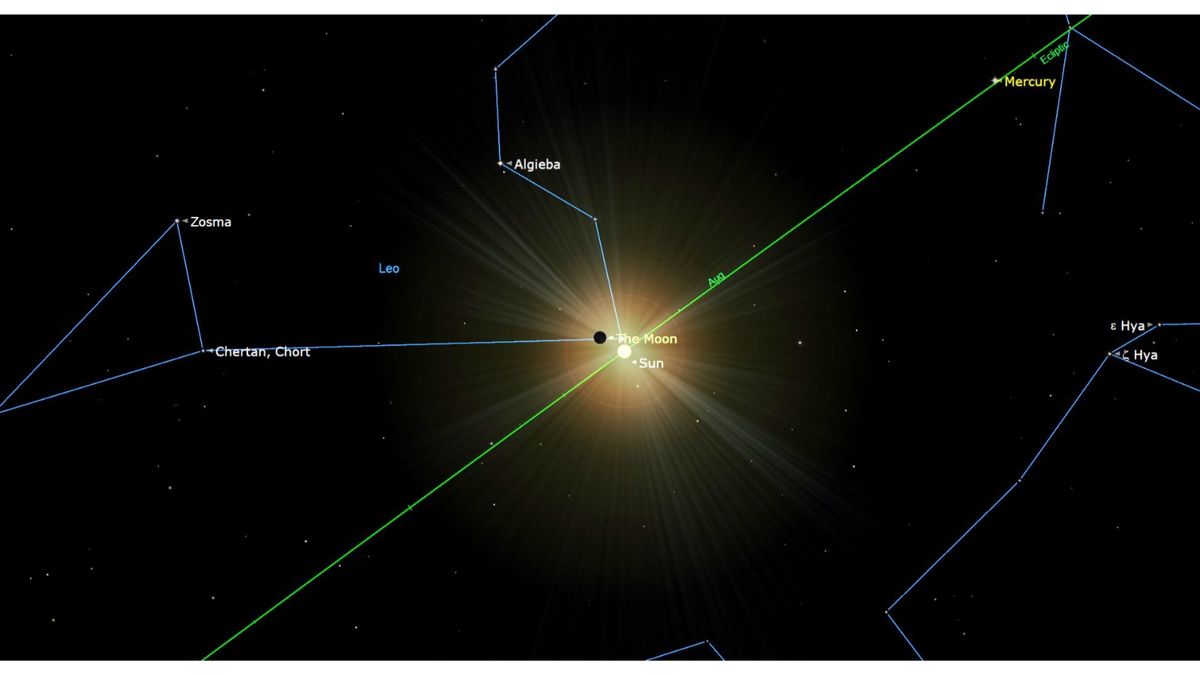
Why is August 23 Special?
A new moon on June 25 marked the beginning of the Northern Hemisphere's summer of 2025, which was followed by July 23, August 3, and September 21. The August 23 new moon turns into the Black Moon because there are four new moons in the season. Only roughly once every 33 months do seasonal Black Moons occur, such as the one on August 23.
Other Definitions of Black Moon
Another definition of a Black Moon is the second new moon in a single calendar month, which won't happen again until August 31, 2027.
Can You See the Black Moon?
A Black Moon cannot be observed in real time, unlike a supermoon or lunar eclipse. The moon's unlit side faces us during the new moon phase because it is positioned between Earth and the sun, making it invisible against the bright sky.
Source: Space.com
